Free PD tool
Measure your PD online.
Free, no card.
Find your pupillary distance with your phone or laptop camera in under a minute. No credit card, no ruler, no sign-up. The camera picture stays on your device.
- Phone or laptop
- Distance and reading PD
- No app to install
- Glasses off
- Light in front of you
- Camera at eye level
Step by step
How to measure your PD.
Three steps, about a minute.
-
01
Glasses off.
If you wear glasses, take them off. Face a window or a lamp, so your eyes are well lit.
-
02
Look into the camera.
Phone or laptop: camera at eye level, about an arm’s length away. Hold still for a few seconds.
-
03
Copy your PD.
Paste it into the lens order at your store. Done.
Video
Watch it once.
40 seconds, start to finish.
The whole measurement, from Start to your PD, on a phone and on a laptop.
Average PD
What is the average PD?
About 63 mm for adults.
In a large US survey, the average PD was about 62 mm for women and 64 mm for men, and nine in ten adults measured between about 57 and 70 mm. Children’s PD is smaller and grows with them, to about 60 mm by age 15.
- Womenaverage 61.7 mm9 in 10: 55.5–67.5 mm
- Menaverage 64.0 mm9 in 10: 58.5–70.0 mm
- Childrenage 3 to 15about 48 to 60 mm
Children’s average PD by age
| Age | 1 | 3 | 5 | 7 | 9 | 11 | 13 | 15 |
|---|---|---|---|---|---|---|---|---|
| Boys | 45 | 48 | 51 | 53 | 56 | 58 | 59 | 61 |
| Girls | 44 | 47 | 50 | 52 | 55 | 56 | 58 | 58 |
Millimetres, distance PD. Any child can be a few millimetres either side. For children’s glasses, have an optician measure.
Is my PD normal?
About 99 in 100 adults in the 2012 survey below measured between 54 and 74 mm (98 in 100 women), and the full range was 51 to 77 mm. So a number near the edges can be right.
If yours reads outside 54–74 mm, measure once more: glasses off, facing the camera straight on, in good light. If it still does, or it is more than 2 mm from the PD on your prescription, ask an optician to measure it before you order.
Measure againSources. Adults: the 2012 Anthropometric Survey of US Army Personnel (ANSUR II; Gordon et al., 2014): 1,986 women and 4,082 men aged 17 to 58, measured with a pupillometer; averages and ranges from its public data. The 1988 Army survey (3,976 people with a PD measurement) gave 62.3 mm for women and 64.7 mm for men (Dodgson, 2004). Children: 1,311 children aged 1 month to 19 years in one US community (MacLachlan & Howland, 2002), averages from the study’s growth curves, as distance PD.
Accuracy
Good enough to order.
Honest about the rest.
- $0no card, no sign-up
- ±2 mmtypical accuracy
- 0photos sent or saved
Good for
- Ordering single-vision glasses or sunglasses online
- Checking the PD a store or an old prescription gave you
- Choosing a frame width that suits your face
Ask an optician to confirm
- Progressive, bifocal or high-prescription lenses
- Glasses for children
- A result more than 2 mm from your prescription’s PD
For eyewear stores
Add it to your store.
Free, no sign-up.
Shoppers stop at the lens order when they don’t know their PD. Put this button next to your PD field: they measure in a new tab and come back with the number.
- Plain HTML, no script
- Takes your store’s font and colour
- Shopify, WooCommerce or any site
Need a hand adding it? Write to [email protected]
<a href="https://lesslens.com/pd" target="_blank" rel="noopener" style="display:inline-block;padding:10px 18px;border:1.5px solid;border-radius:99px;color:inherit;font-weight:600;text-decoration:none">Measure your PD <span style="font-weight:400;opacity:.65">by LessLens</span></a>PD questions
Good questions.
Straight answers.
Updated November 18, 2026.
New to prescriptions? How to read yours
Choosing frames? How to try them on online
Your frame width? Measure your glasses size
Something else? Write to us
What is PD?
PD, or pupillary distance, is the distance between the centres of your pupils in millimetres. Lens makers use it to put the optical centre of each lens in front of your eye. Almost all adults measure between 54 and 74 mm.
What is the average PD?
About 63 mm for adults: in a large US survey, about 62 mm for women and 64 mm for men, and nine in ten adults measured between about 57 and 70 mm. Children’s PD is smaller and grows with them, from about 48 mm at age 3 to about 60 mm at 15, so have it measured again for each new pair; for children’s glasses, ask an optician.
Where do I find my PD on my prescription?
Look for “PD” near your lens powers. One number, such as 63, is your PD. Two numbers around 30, such as 32/31, are each eye’s PD: add them up for a single PD. Two numbers around 60, such as 64/61, are distance and near PD: use the first for everyday glasses. Many prescriptions leave it out, because PD is usually measured when glasses are fitted, not during the eye exam. If yours has none, measure it here, or ask the store that made your last glasses.
Distance PD or near PD: which one do I need?
For everyday glasses and sunglasses, use the distance PD: the big number in your result. For reading-only glasses, use the near PD, which is about 3 mm less; your result shows it too.
Single or dual PD?
Most online orders ask for one number, the single PD. Dual PD gives each eye’s distance from the middle of your nose. If a store asks for dual PD and you only have a single PD, half of it for each eye is the usual choice for single-vision lenses.
How accurate is online PD measurement?
For most people the result is within about 2 mm of an optician’s measurement. Accuracy depends on the size of your iris, the coloured part of the eye, which varies from person to person: with an iris smaller or larger than most, the result can be off by up to about 3 mm. For progressive lenses or a strong prescription, ask an optician to confirm.
Can I keep my glasses on?
No. Lenses and reflections get in the way, so take your glasses off while you measure. Contact lenses are fine.
Is my camera picture saved or sent?
No. The measurement runs in your browser. The camera picture and the result stay on your device, and the camera turns off as soon as the measurement ends.
Do I need a credit card or a PD ruler?
No. There is no card to hold and no ruler to print: you need only your phone or laptop camera.
Can I add this tool to my eyewear store?
Yes, for free and without signing up. Copy the button or link code from “Add it to your store” on this page and paste it next to the PD field of your lens order, on your PD help page or in your FAQ. It is plain HTML with no script, so it works on Shopify, WooCommerce and any site that accepts HTML.
LessLens for eyewear stores
PD is step one.
Try-on is next.
Shoppers see your frames on their own face, right on your product page: in the browser on computers and phones, and on iPhone also in Apple’s AR viewer, where available. Start with a 60-day pilot on up to 20 of your frames, with no subscription fee.
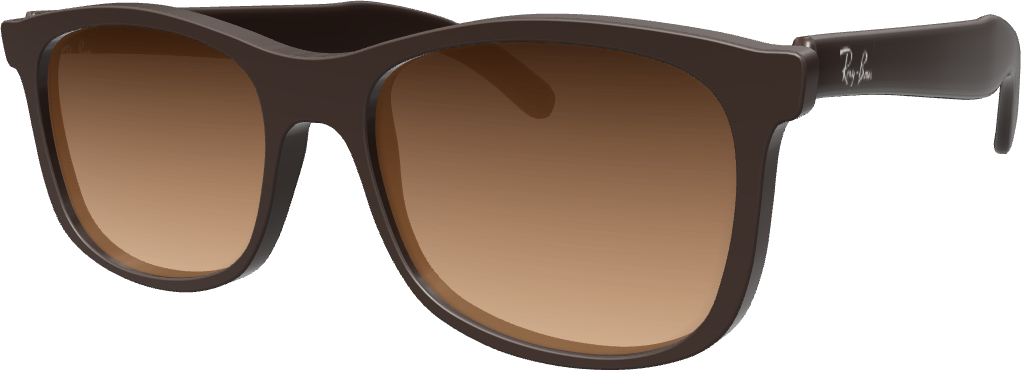
Shopping for glasses? See frames on your face in LessLens for iPhone.